Pest control service in Oak Ridge delivers systematic diagnostic assessments, moisture monitoring, and targeted biological barriers for properties across Anderson County and Roane County. Property owners seeking a pest control service near me receive transparent engineering-backed inspections to halt subterranean termites, wood-boring ants, and seasonal rodent intrusions without open-ended service commitments.
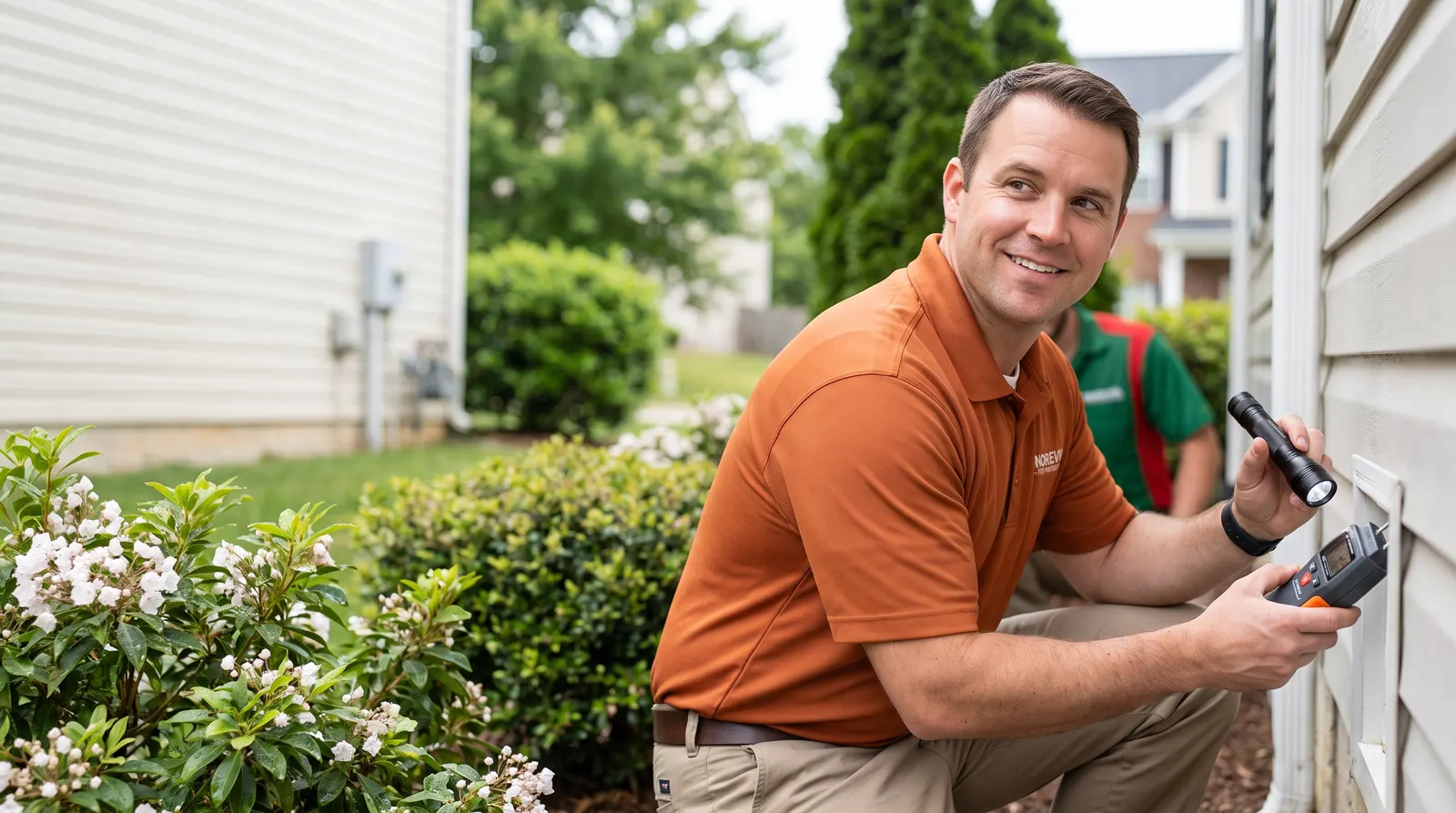
Pest control service company in Oak Ridge is an environmental health and structural defense provider that identifies, eliminates, and mechanically excludes biological infestations from residential and commercial structures.
Every service reflects the same meticulous attention to detail, whether it's a single job or a larger pest control service project across Oak Ridge.
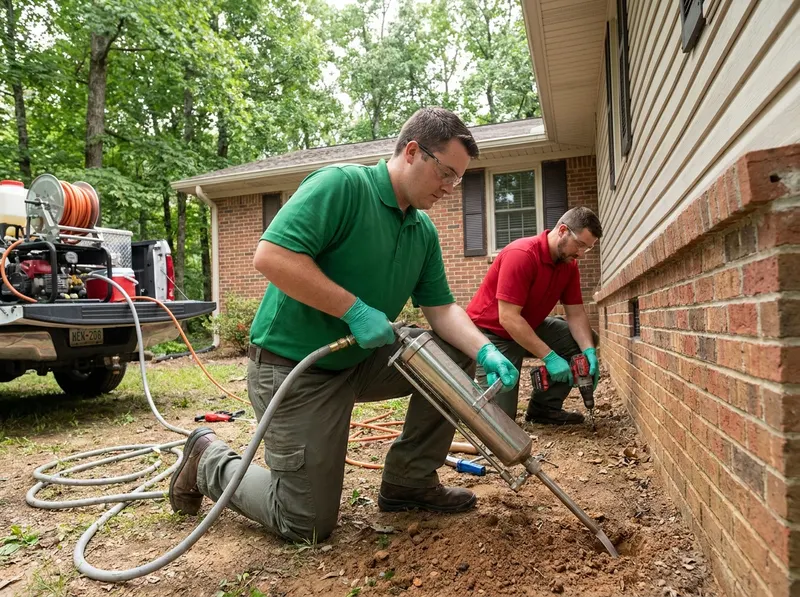
Subterranean termite soil treatment applies liquid non-repellent termiticide barriers along exterior foundation trenches and interior crawlspace perimeters. East Tennessee red clay soils retain high moisture levels that support large native Reticulitermes flavipes colonies. Technicians trench foundation soil to a depth of 6 inches and a width of 6 inches, treating the backfill at a standardized volume of 4 gallons per 10 linear feet. Where concrete patios, brick porches, or garage slabs abut the living space foundation, technicians drill 1/2-inch vertical access holes spaced 12 inches apart through the slab to rod-inject the protective liquid barrier beneath the concrete. This application arrests subterranean termite foraging pathways toward sill plates and structural framing timbers without releasing chemical odors into the indoor living environment. Complete treatments also incorporate interior crawlspace pier inspections, localized subfloor moisture mapping, and baseline linear perimeter measurements. Service pricing starts at $950 for small footprints, with overall structural defense investments ranging between $950 and $2,400 depending on linear foundation footage, structural access constraints, and slab drilling requirements.
Get a quote →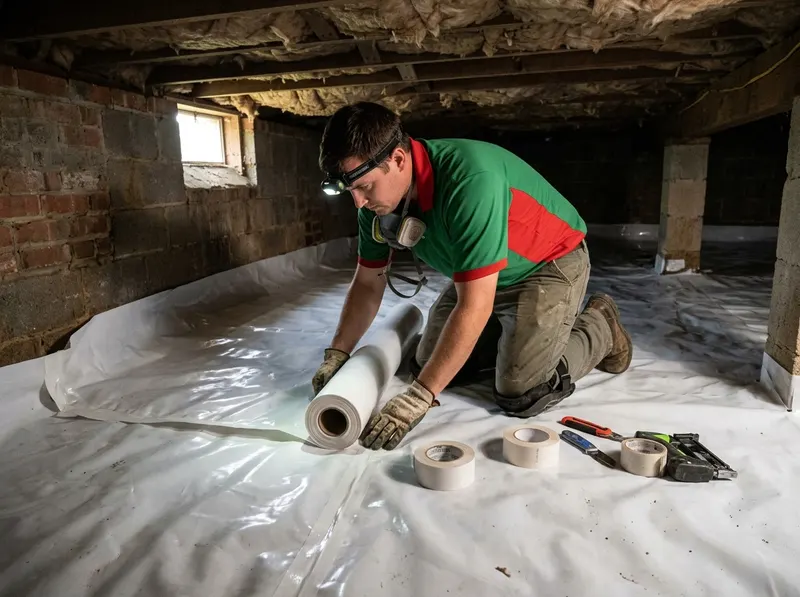
Crawlspace encapsulation regulates ambient moisture and soil humidity beneath living areas to eliminate reproductive environments for wood-decay fungi, silverfish, and camel crickets. High humidity levels above 70% in earthen crawlspaces soften joists and draw wood-boring pests into structural sills. Technicians inspect the substructure, rake the soil grade smooth, remove organic debris, and install high-density 12-mil or 20-mil virgin polyethylene ground liners. Liners extend 6 to 12 inches up the masonry foundation walls and support piers, where they are mechanically pinned and sealed with heavy polyurethane mastic and vapor tape to stop ground-evaporated dampness. Bare structural timbers, subflooring plywood, and sill plates receive topical applications of inorganic disodium octaborate tetrahydrate (DOT) wood protectants that deter fungal wood rot, powderpost beetles, and drywood insects. Technicians inspect crawlspace vents, either sealing them for conditioned encapsulation or fitting corrosion-resistant bronze wire screens to maintain cross-ventilation while excluding wildlife. Typical installations begin at $1,800 for basic ground barrier layouts and scale to $4,200 for full high-mil sealed encapsulations with structural timber coatings.
Get a quote →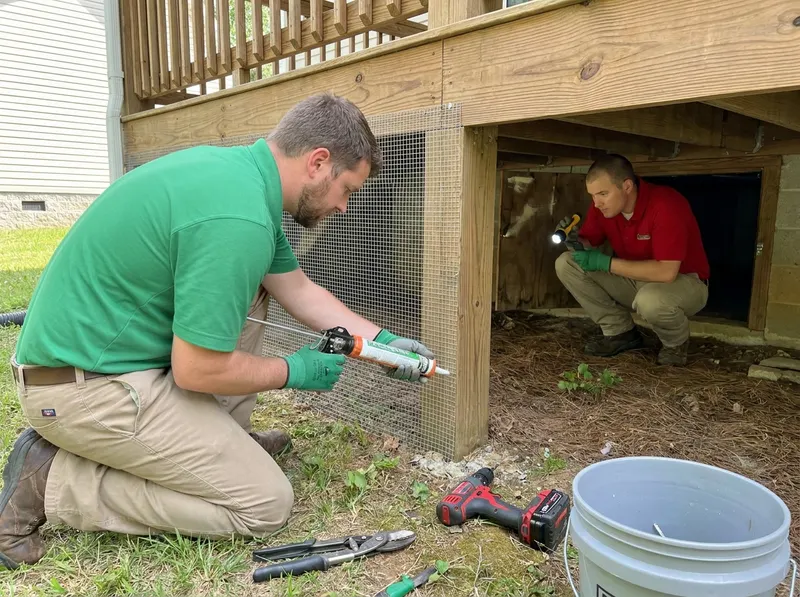
Rodent mechanical exclusion inspects, sanitizes, and physically seals exterior foundation gaps, plumbing chase entries, and roofline intersections against eastern woodrats, deer mice, and roof rats. Technicians survey the entire building exterior from grade level to roof ridge lines to locate transit entry points as small as 1/4 inch. Technicians eliminate structural access points by installing 1/4-inch heavy-gauge stainless steel wire cloth, custom-formed aluminum flashing, concrete hydraulic patches, and fire-resistant expanding polyurethanes across every opening. Special focus is applied to electrical service penetrations, HVAC refrigeration lines, foundation corner vents, and garage door weatherstripping gaps. Within crawlspace runs, basement utility spaces, and attic voids, technicians remove contaminated insulation, vacuum biological droppings with sealed HEPA filtration vacuums, and apply natural enzyme odor neutralizers to eradicate territorial pheromone trails that invite exterior colonies. Complete exterior exclusion packages start at $450 for localized repairs and scale to $1,200 for full perimeter structural sealing and restorative insulation sanitation.
Get a quote →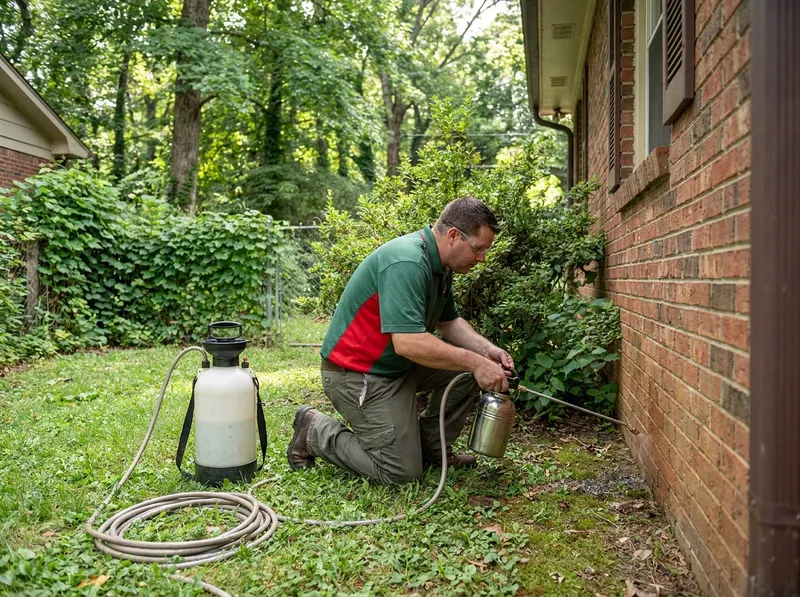
Perimeter agricultural and forest bug remediation targets overwintering populations of brown marmorated stink bugs, kudzu bugs, and boxelder bugs before they infiltrate attic voids and exterior siding. Technicians treat exterior door jambs, soffits, window weep holes, roof eaves, and exterior cladding intersections using microencapsulated exterior barriers formulated to resist degradation from ultraviolet sunlight, autumn temperature fluctuations, and heavy rain. Treatments take place during peak seasonal migration runs in September and October, preventing seasonal indoor aggregations without indoor residual chemical broadcasting. Technicians inspect exterior window screen fits, seal gable vents with fine metal screening, and treat high-harbor siding corners along southern and western building exposures where solar heat draws gathering swarms. By stopping aggregations on exterior vertical walls, properties avoid the unpleasant biological odor and staining associated with dead insects accumulating inside interior wall cavities and ceiling light fixtures. Baseline applications start at $300.
Get a quote →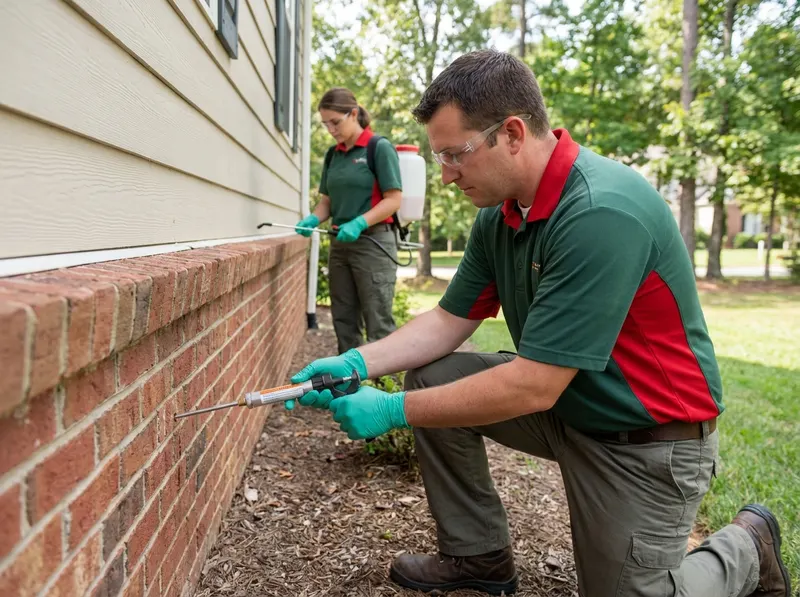
Carpenter ant management locates parent and satellite nesting colonies within structural framing, wall voids, and damp porch headers to halt structural wood cavitation. Technicians conduct evening and low-light diagnostic inspections to trace structural foraging lines back to entry points near rooflines, window headers, and wet crawlspace sills. Technicians inject targeted botanical dusts or pyrethroid formulations directly into identified wall voids and place concentrated micro-bait stations along known foraging trails along foundation perimeters. External perimeter barrier sprays applied to exterior foundation stem walls, window heads, and roofline intersections sever trails connecting mature exterior landscape colonies to structural framing timbers. Technicians identify and document surrounding landscape risk factors, including moisture-compromised trees, dead branches touching the roof, and untreated landscape timbers located within 20 feet of the home foundation. Initial localized treatments start at the $300 minimum charge, with extensive structural nesting programs scaling upward depending on wall void accessibility.
Get a quote →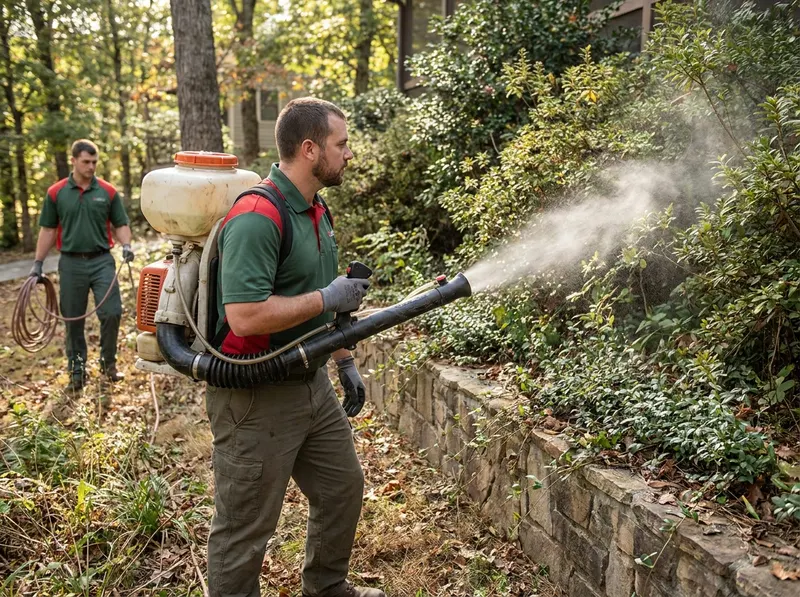
Targeted tick and mosquito remediation creates protective buffer zones around outdoor recreational spaces, landscape margins, and wooded yard borders. High-pressure fine misting applies focused synthetic pyrethroid or biological active agents directly to the undersides of dense foliage, ornamental shrubs, and shade-canopy brush where resting adults harbor during daylight hours. Technicians evaluate property drainage to treat standing water pools, detention swales, and culvert margins with Bacillus thuringiensis israelensis (BTI) microbial briquettes that eliminate larvae without disrupting beneficial aquatic organisms. In wooded perimeters bordering greenways, technicians install perimeter tick tubes filled with permethrin-treated nesting materials collected by wild mice, severing the Lyme disease transmission cycle at its primary rodent vector. Multi-application seasonal schedules run from May through September, with pricing starting at $300 per treatment cycle.
Get a quote →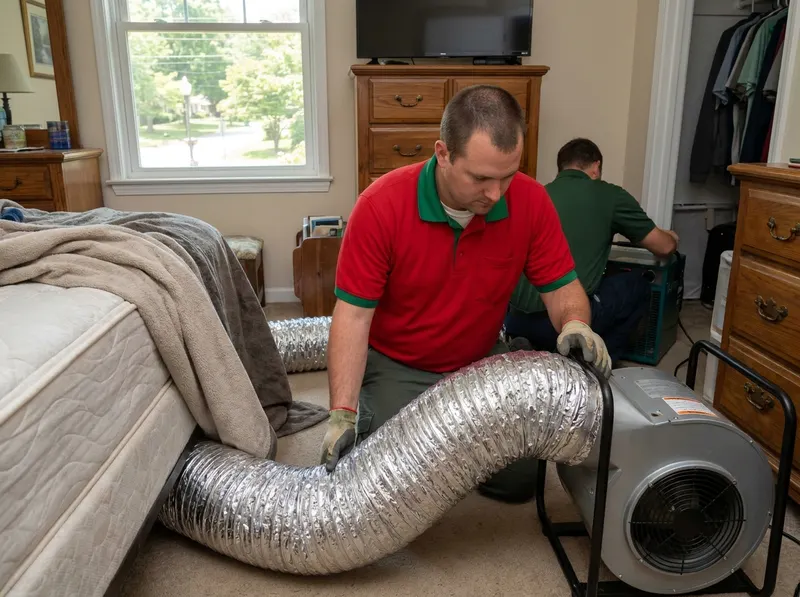
Bed bug thermal convection remediation uses high-output electric heating units and industrial air movers to elevate interior structural temperatures to a lethal range between 122°F and 135°F. This non-chemical heat distribution penetrates deep mattress seams, hollow headboards, baseboard crevices, dressers, and wall cavities, eliminating all life stages, including eggs, nymphs, and adults, in a single targeted visit. Technicians monitor heat distribution across the property through wireless infrared sensors and thermal imaging cameras to guarantee sustained lethal exposure in hidden cold spots without scorching delicate furnishings or building components. Prior to the thermal cycle, technicians inspect sensitive personal items, electronic units, and heat-sensitive possessions to provide detailed staging instructions. Because heat leaves no chemical residues on surfaces, rooms can be reoccupied immediately once ambient temperatures return to normal. Full-residence thermal interventions start at $1,200 based on treated cubic footage and structural layout.
Get a quote →
Commercial kitchen pest management maintains rigid sanitary barriers against German cockroaches, fruit flies, and drain flies in food-handling, research, and corporate dining facilities. Technicians place non-toxic pheromone monitors, clean internal organic debris from commercial trench drains with bio-enzymatic foam treatments, and apply discrete gel bait formulations behind stainless steel cooking lines and dishwashing stations. These targeted applications run without dispersing airborne chemicals over preparation countertops or dining surfaces, satisfying rigorous food-safety audits and public health standards. Technicians audit sanitation conditions, structural door sweeps, grease trap maintenance protocols, and incoming inventory practices to detect pest introductions before established harborages can develop. Scheduled regulatory-compliant commercial programs start at $350 per monthly audit, including digital monitoring logs and corrective mechanical action reports.
Get a quote →You get a firm, itemized quote for your pest control service before any work begins, no surprises, no pressure.
Careful prep, tidy work, and a full cleanup when we are done. We treat your home and belongings like our own.
The same trusted, background-checked team from the first call to the final check.
Selecting the correct intervention depends on structural construction, foundation materials, and surrounding forest canopy density across Oak Ridge residential properties. If a property exhibits isolated, seasonal pest sightings in kitchen or utility spaces, choose targeted exterior barrier applications and spot treatments; this establishes an outer chemical-residual barrier along stem walls and perimeter soil while keeping indoor air chemistry clean and uncompromised. If visual wood shavings, hollow sounds in joists, shelter tubes on masonry, or discarded insect wings appear near crawlspace vents or baseboards, select comprehensive subterranean termite structural defense; this utilizes liquid non-repellent perimeter trenching and deep-rod sub-slab injections.
The trade-off between these selections centers on treatment depth, mechanical disruption, and upfront labor: exterior barrier perimeters address general foraging species along building edges with minimal structural disturbance, whereas dedicated termite and wood-destroying insect remediations require extensive soil excavation, perimeter concrete drilling, sub-slab void injections, and prolonged structural moisture monitoring. If an attic space or basement displays gnaw marks on electrical wiring, damaged pipe insulation, or scattered biological droppings, choose permanent mechanical rodent exclusion rather than repetitive interior bait placement; mechanical exclusion permanently blocks transit apertures using rust-proof steel wire mesh and masonry fills, whereas poison baiting alone leaves entry voids unprotected, resulting in persistent reinfestations each autumn as forest temperatures drop. For homes bordering wild woodlands or municipal greenways such as the North Boundary Greenway or Haw Ridge Park, pairing physical mesh exclusions with targeted exterior perimeter treatments yields lasting structural security, whereas chemical applications alone require routine seasonal replenishments due to degradation from heavy local rainfall, high organic humus layers, and dense canopy shade.
If high ambient relative humidity inside an unsealed earthen crawlspace regularly exceeds 70%, surface insecticidal sprays produce only short-term suppression because damp subflooring timbers continuously draw wood-decay fungi, camel crickets, and silverfish; the lasting operational solution is pairing crawlspace vapor barrier encapsulation with direct borate structural timber treatments. Property owners weighing localized chemical applications against whole-home mechanical sealing must balance immediate lower upfront expenditures against the long-term durability of permanent physical structural shielding.
Every project gets a firm, written price after a free on-site visit. Ranges below for orientation.
Tell us about your pest control service job and we'll send a clear, written quote, usually the same day. Or just call and talk to a real Oak Ridge pro.
(865) 730-8216
Oak Ridge presents unique structural pest conditions due to its topography along Blackoak Ridge and East Fork Ridge, combined with the dense forest corridors running between the American Museum of Science and Energy, Haw Ridge Park, and Melton Hill Lake. The region's damp alluvial soils and legacy mid-century crawlspace home designs, particularly the original prefabricated Alphabet homes (Types A, B, C, and D) in Woodland and Highland View, create chronic moisture pockets that draw subterranean termites and wood-boring pests into contact with untreated framing lumber. Properties bordering dense greenbelts near Oak Ridge National Laboratory and the Clinch River basin experience intense seasonal perimeter pressure from white-footed mice, eastern woodrats, and overwintering stink bugs, requiring physical exterior exclusions rather than repeated indoor chemical sprays. Furthermore, the karst limestone geology underlying Anderson County and Roane County causes localized soil subsidence, shifting exterior perimeter soil lines away from concrete foundations and creating micro-gaps through which pavement ants, carpenter ants, and burrowing pests gain direct access to basement slabs. Along the sloping topography of Emory Valley and Country Club Estates, heavy seasonal rain runoffs saturate footing soils along the base of steep residential driveways, washing away standard topical pesticide sprays and necessitating the use of deep-trench non-repellent liquid barriers and weather-resistant microencapsulated exterior sealants. In historic neighborhoods like Jackson Square and Scarboro, uninsulated stone and masonry crawlspace walls frequently operate above 75% relative humidity throughout the humid summer months, creating prime conditions for wood-decay fungi, powderpost beetles, and camel cricket harborage. Resolving these challenges requires an Integrated Pest Management protocol grounded in East Tennessee soil mechanics and local residential architectural history.
Free estimates for Oak Ridge & the surrounding area.
 Norevia Pest Protection